

How André Boto transforms eggs into art: the stories behind the photos
Eggs have always been a popular subject matter for submissions to the World Food Photography Awards sponsored by Tenderstem® Bimi® Broccolini. But there’s one photographer in particular who’s really egg-perimented over the years: André Boto.
In this blog, the Portuguese photographer uncovers the stories behind the creation of four of his egg photos which have been finalists in our MPB Award for Innovation category. This is a category that is open for interpretation and requires interesting and original shots - something all André’s egg images deliver…
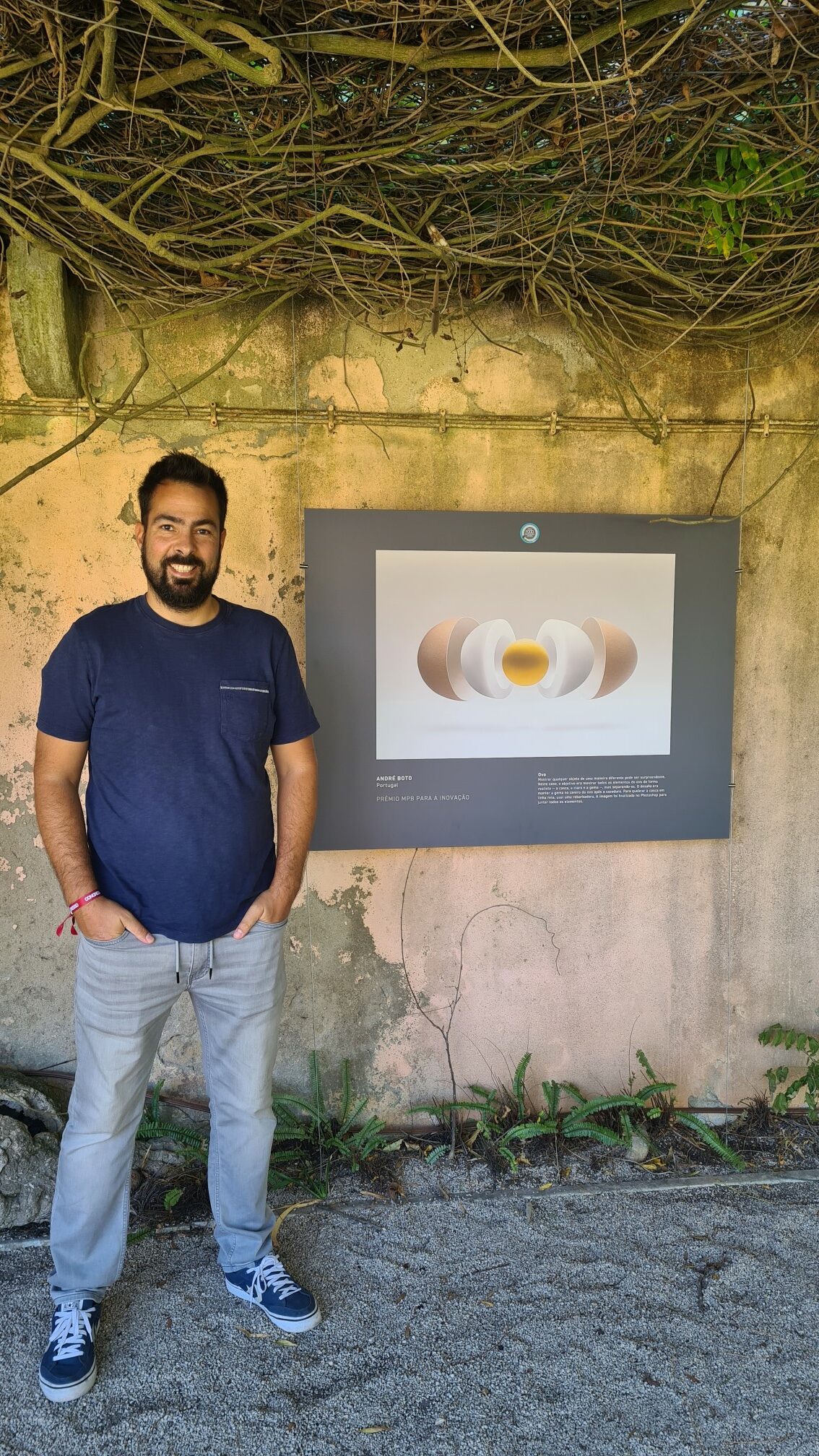 André Boto and his egg image, which was Highly Commended in the MPB Award for Innovation 2025, at the World Food Photography Awards exhibition at the Congresso de Cozinha, Portugal's largest gathering of culinary professionals
Words by André Boto
In both my personal and commercial work, I enjoy exploring objects and their inherent qualities like: texture, shape, lines, and colour. When I began creating my first images using eggs as the central element, I quickly discovered how fascinating and incredibly versatile they are.
Their interior has one shape (when raw), when boiled they transform completely, and when fried they change again. Their translucency when raw and their lack of rigidity allow the egg to adopt countless shapes and be used in many different ways. Its color, symmetry, and the subtle roughness of the shell offer endless variations and a rich spectrum of photographic possibilities.
It is an object with a simple appearance - visually fragile on one hand, yet surprisingly robust and strong on the other. Almost always elegant, the egg is capable of generating a wide variety of narratives and stories.
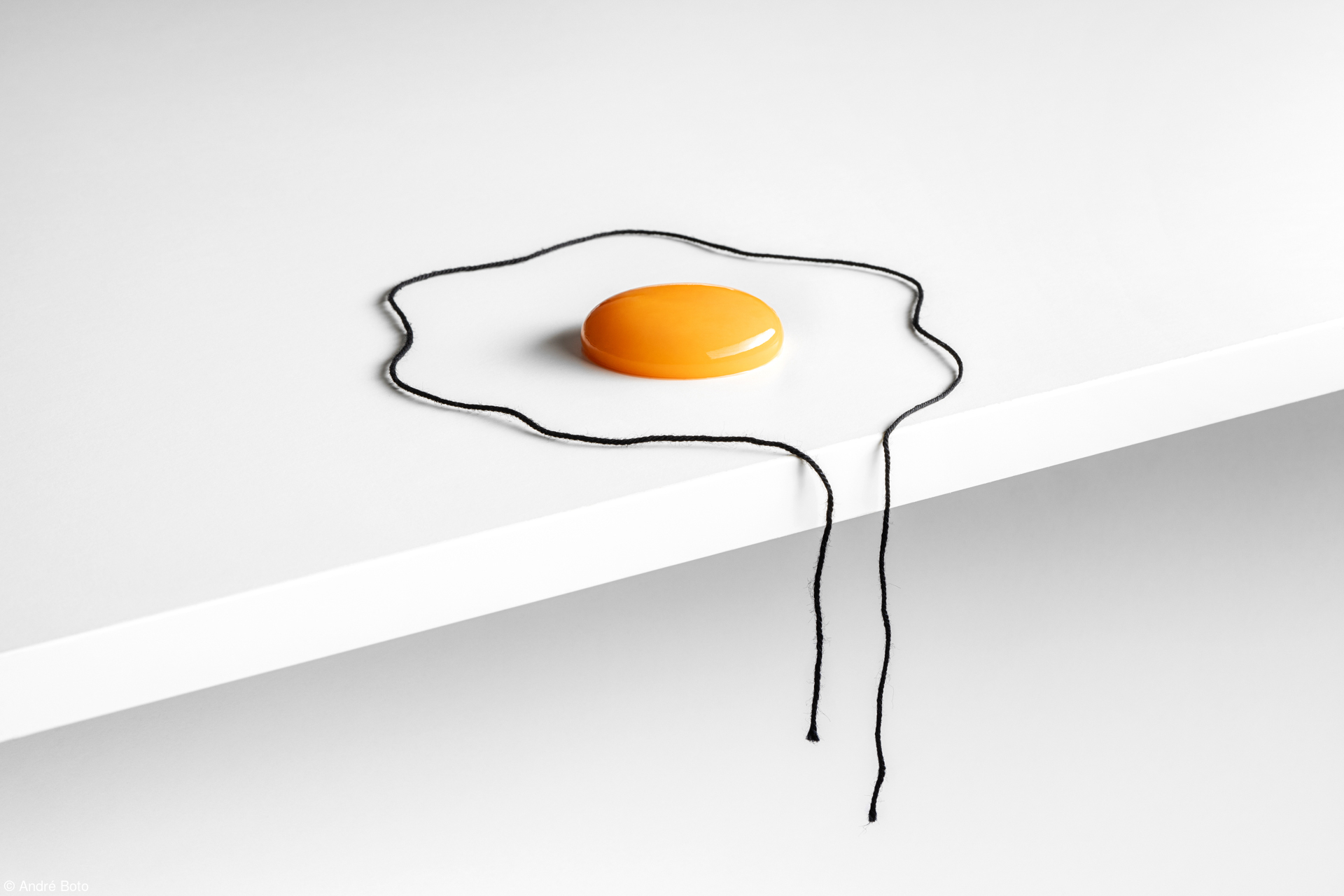
- What was your inspiration for the image?
Two of my greatest references are René Magritte and Salvador Dalí. Although they are very different artists, they share a unique way of working with everyday objects, transforming them into images that challenge the viewer. That was precisely my intention with this image: to challenge the observer by using a kind of optical illusion and Gestalt theory, tricking the viewer’s brain into interpreting the line as the actual contour of the egg.
- How did you achieve it?
In this case, there was no need for extensive image editing, so the process was simple. I only needed to arrange the elements on the table in a visually interesting position/composition and then photograph them.
- What was the main challenge? How did you overcome it?
There were two main challenges. The first was removing the yolk from the egg without bringing any of the egg white with it. To achieve this, I cracked the egg onto a plate and then used a plastic water bottle. By squeezing the bottle, touching its opening lightly to the yolk, and releasing the pressure, the yolk was gently sucked inside. After that, I could place it on the edge of the table to photograph it.
The second challenge was keeping the thread wrapped around the egg in place. Due to the weight of the hanging ends, it kept slipping off, so I had to wet the thread slightly to make it stick.
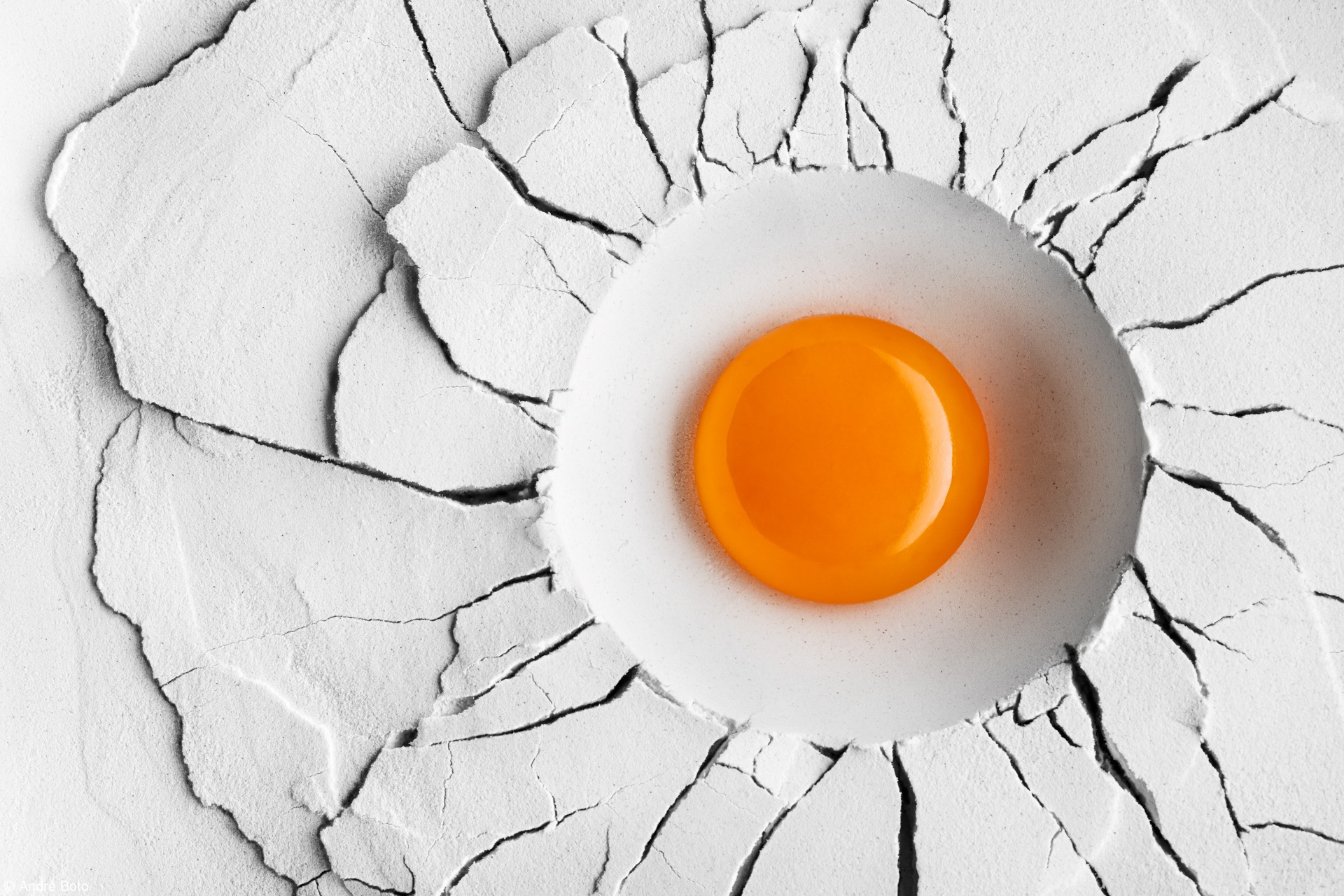
- What was your inspiration for the image?
The goal was to create a kind of crater, similar to a volcano, which is also an element that fascinates me. In this image, the egg represents the lava, while the volcano walls were formed using flour. Beyond this visual reference, eggs and flour are two ingredients that often come together in cooking, so their presence side by side feels naturally meaningful.
- How did you achieve it?
I used two kilos of flour inside a container and pressed it firmly to compact it. Then I inserted a round object into the flour; the motion of pushing it in and pulling it out created the cracks. For the egg yolk, I used the same plastic-bottle suction technique described in the previous image. The circular reflection visible on the surface of the yolk comes from the top edge of the flour.
- What was the main challenge? How did you overcome it?
In truth, this image was quite simple to create. I only had to repeat the insertion of the round object two or three times to obtain cracks with an aesthetically pleasing shape. It was another image that required only minimal editing.
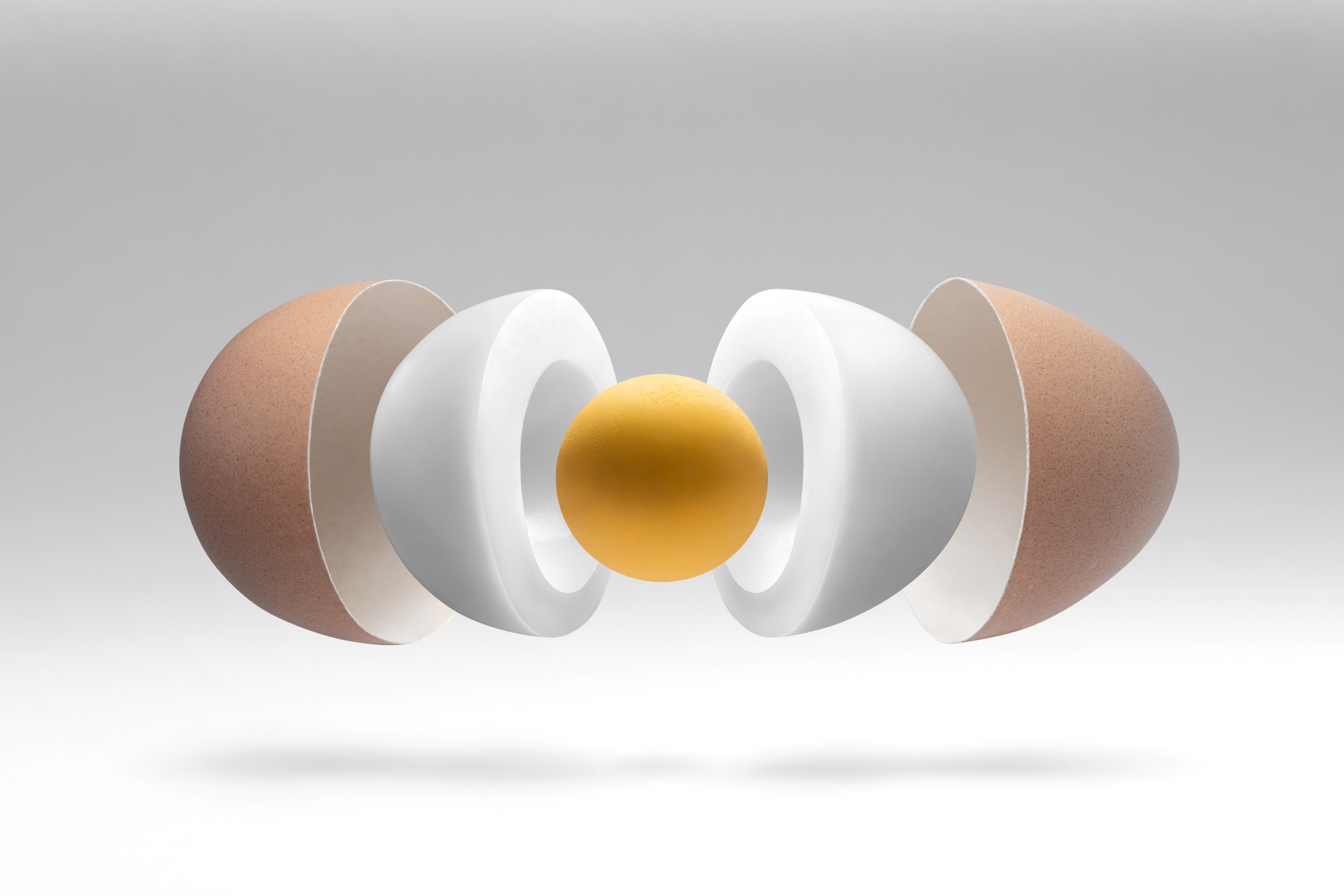
- What was your inspiration for the image?
This image came from my desire to reveal all the elements that make up an egg separated, yet still close to one another, and clearly visible. It is almost as if we were slicing the planet earth, with the yolk representing its core.
- How did you achieve it?
In this case, some editing was necessary, mainly to position the egg white and the shell in mid-air. However, every component in the final image comes from real eggs.
- What was the main challenge? How did you overcome it?
There were several challenges in creating this image. First, I had to find a way to cook the egg so that the yolk would remain perfectly centered. After boiling several eggs, I found that rotating them during cooking helped the yolk settle in the middle.
The biggest challenge, however, was breaking the shell in a clean, round shape. I tried several types of saws, including a very fine jeweler’s saw, but none of them worked - the shell would always shatter. The solution was to use an angle grinder. Thanks to its high rotation speed and friction, it allowed me to cut through the shell without breaking it. After that, I smoothed the edge with sandpaper.
Several eggs were used to obtain perfect components, and with the help of Photoshop I positioned the photographed elements in their final arrangement.
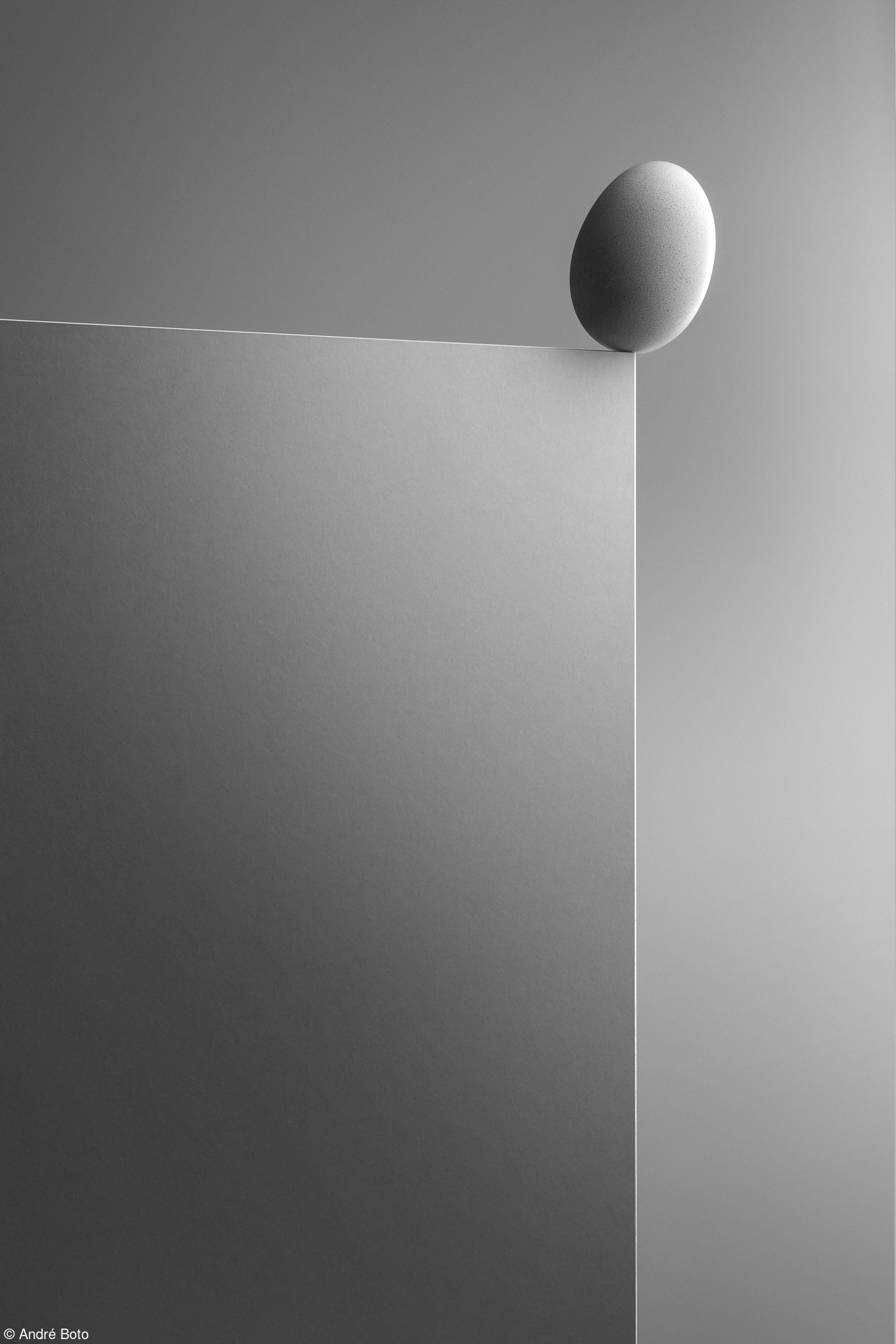
- What was your inspiration for the image?
The idea was to explore the simplicity and shapes of the egg. I wanted to create a very minimalist image, with few elements but highlighting the egg, as if it were about to fall, leaving us wondering how the egg balances in that unbalanced position but mainly thinking in what happened next.
- How did you achieve it?
The egg is glued to the edge of the table. After that, it was just a matter of using light to highlight the egg and its shape. Side light helped a lot.
- What was the main challenge? How did you overcome it?
Finding the ideal position to glue the egg to the edge of the table was the biggest challenge in this image.
Want to give creativity a crack?
If André’s egg-perimentation has inspired you, why not try our MPB Award for Innovation category? Check out all the category’s previous finalists here and get your creative juices flowing even more!
Recent Posts
- World’s best food photographs served up! June 2, 2026
- Feast on the world’s best food photography at free exhibitions in London May 19, 2026
Categories
Archives
Join our community
Sign up to our mailing list today and become part of our exclusive community. Be the first to know tips and tricks from our judges, stories from our photographers and all the very latest news.